


 EU lawmakers must “put public health first and reject any attempt to weaken Europe’s protections from pesticides”
On 1 July in Brussels, parents of children harmed by pesticide exposure, joined by former Dutch politician who was himself affected by childhood pesticide exposure, gathered to share their story and urge EU lawmakers: put public health first and reject any attempt to weaken Europe’s protections from pesticides.
Their powerful testimonies come at a crucial time: European governments struggle to agree on a toxic policy package that would scrap essential pesticide safety rules (the so-called Food and Feed Omnibus), and parliamentarians prepare their own fight on the file.
The European Commission’s Food Omnibus proposes a dangerous shift in pesticide regulation, made even worse by the leaked draft of the European Parliament’s report (Dorfmann-Picaro): moving towards lifetime pesticide approvals, reducing safety assessments, and sidelining independent science. While it’s easy to fall into the politics and negotiations around the file, it is essential to recentre the debate on the real human impacts of such a proposal.
Florence Jamault, French mother of a child victim of pesticide exposure, and now an organic farmer, said:
“Today, we know that alternatives exist and that they work. It is difficult, but less difficult than what all our sick children go through. The decision politicians make are not just technical decisions. They concern children, they concern families, they concern farmers, and the trust citizens place in European institutions.”
Isabelle Marchand, a French mother whose life completely changed in 2019 when her daughter was diagnosed with leukemia, said:
“In 2023, the cancer came back and we had to start again: hospital, therapy... She is still fighting, but at what price? As parents, we fight to protect our families, but we need to ask why authorities are not protecting people and why they don’t apply the precautionary principle… Behind the numbers there are lives.”
Franck Rinchet-Girollet, a French father of a child who suffered from paediatric cancer and is now in remission, and a spokesperson for the association Avenir Santé Environnement, said:
“My son had cancer when he was two. We live in an area of intensive agriculture where many children have cancer. Economic interests take priority over public interests. I am angry to see that health in France and Europe does not take precedence over economic interests.”
Rendert Algra, Dutch farmer's son and former CDA (Christen-Democratisch Appèl – EPP) politician, who suffers from Parkinson’s disease, said:
“For the first 17 years of my life, I grew up in paradise, where nothing seemed wrong. I used to run the tractor for my family and I personally did the spraying for several years. I was diagnosed with Parkinson's four years ago, which I’m certain is connected with my exposure to pesticides.”
About the speakers
Florence Jamault: mother of a child victim of pesticide exposure, Florence chose not to stand idly by. She became an organic vegetable farmer. Producing differently, raising awareness, passing on knowledge, and humbly contributing to a necessary change have become the heart of her commitment.
Isabelle Marchand: living in Saint-Nolff, Brittany, with her family, Isabelle’s life completely changed in 2019 when her daughter was diagnosed with leukemia. Since then, they have been fighting to understand, protect their children, and secure official recognition of the risks associated with pesticide exposure near residential areas. With one crucial question for authorities: why aren’t families living nearby spraying benefiting from the precautionary principle?
Franck Rinchet-Girollet: father of a child who suffered from paediatric cancer and is now in remission, Franck is a spokesperson for the association Avenir Santé Environnement. He lives on a cereal plain near La Rochelle, France, an area heavily exposed to intensive agricultural practices, where several documented surges in paediatric cancers have been reported. He advocates for a gradual phase-out of synthetic pesticides, accompanied by massive investment in an ambitious agricultural transition, to place environmental health at the heart of public policy.
Rendert Algra: farmer's son and former CDA (Christen-Democratisch Appèl – EPP) politician. Rendert suffers from Parkinson's disease and attributes his condition to his childhood exposure to pesticides while working on his old cattle farm in Kubaard, Friesland, in the Netherlands (more here).
Policy timeline (tentative dates):
6 July: EU Parliament’s draft report
13 July: Deadline for amendments
5 October: EU Parliament’s environment and agriculture committees vote
19-22 October: EU Parliament’s plenary vote
Source: PAN EU
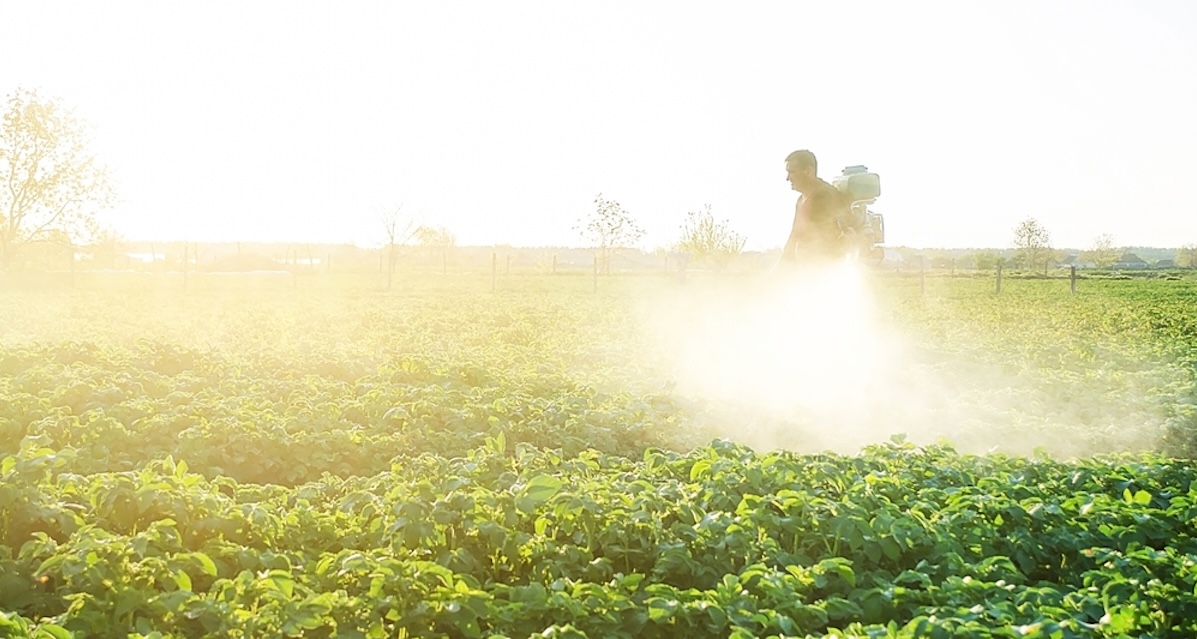
Image: Shutterstock (licensed purchase)