
 Pre-harvest desiccation and non-farming uses of glyphosate should be banned, conference speakers agree. Report: Claire Robinson
Glyphosate, used on over 80% of GM crops worldwide, is up for renewal in Great Britain in December 2026, the date having been extended from the originally planned December 2025. On 8 January the Oxford Real Farming Conference (ORFC) kicked off with a debate on glyphosate.
The debate followed hot on the heels of the retraction of a key 25-year-old paper that regulators worldwide have relied upon to claim glyphosate is safe. The paper, which was exposed in 2017 as being based on unpublished Monsanto data and ghostwriting, was finally withdrawn in December 2025 after researchers made an official complaint to the journal that published it. The paper had been cited around 40 times in the 2015 expert report that led to the herbicide’s EU reauthorisation in 2017.
The ORFC debate was chaired by Helen Browning of the organic certification body, the Soil Association, and was enlivened by the mix of speakers from different backgrounds: Martin Lines, farmer and CEO of the Nature Friendly Farming Network; Prof Michael Antoniou, whose research group at King’s College London became a leader in glyphosate toxicology; Georgie Bray, farm manager of the RSPB’s (Royal Society for the Protection of Birds) Hope Farm; and Nick Mole of Pesticide Action Network UK.
There was a surprising degree of consensus among the speakers that ways to reduce and potentially eliminate glyphosate use must be found. Below is a rundown of the main points raised.
Prof Michael Antoniou: The only safe dose is zero
Prof Antoniou explained the findings of his research group on glyphosate’s health effects. The “acceptable daily intake” (ADI) of glyphosate set by regulators in the EU – the level that regulators believe is safe to ingest daily over the long term – is half a milligram per kilogram of body weight. Yet in animal studies, far lower doses were found to cause non-alcoholic fatty liver disease (NAFLD), a condition that is reaching epidemic proportions in all developed countries, with over a quarter of adults affected.
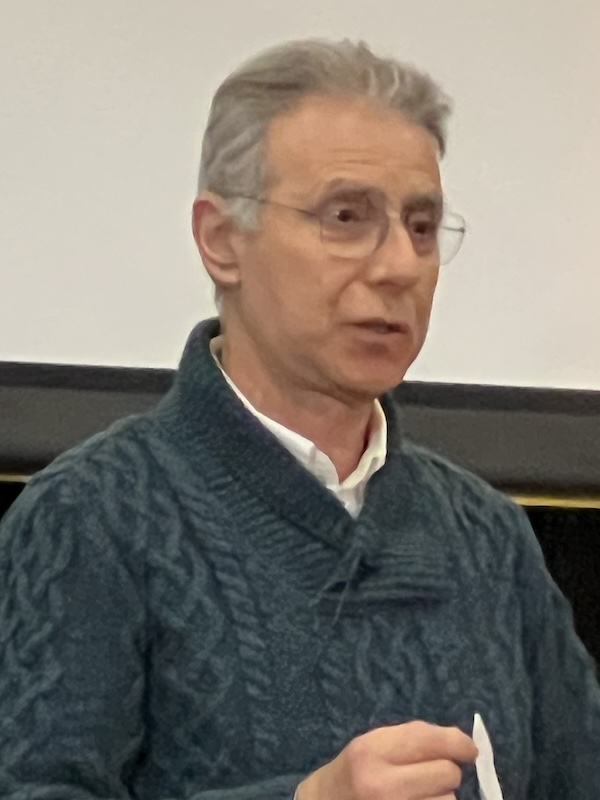
Prof Michael Antoniou speaking at the ORFC
Glyphosate also causes oxidative stress, a destructive process in the body that damages DNA, leading to diseases such as cancer, birth defects, and neurological problems. The chemical also impacts the shikimate pathway, a biochemical pathway that isn’t present in mammals (hence industry’s old claim that glyphosate was non-toxic to mammals), but is present in our gut bacteria. Glyphosate affects the functioning of the gut bacteria, causing oxidative stress, inflammation, and “leaky gut” – a condition that allows undigested foods and bacterial components to travel through the gut walls into the circulation, damaging body tissues and organs, especially the liver.
In general, the commercial formulations of glyphosate (glyphosate + adjuvants) are more toxic than the isolated chemical glyphosate alone. However, a study led by Italy’s Ramazzini Institute, which included Prof Antoniou’s group, found that glyphosate alone administered at the ADI was just as carcinogenic as the formulations when it came to skin and liver cancers and different types of leukaemia. But some cancers were caused only by the formulations, demonstrating the toxicity of the adjuvants. The study was conducted in rats, which are globally accepted by regulators as surrogates for human health risks.
Prof Antoniou added that glyphosate is “deceptively toxic”: “Glyphosate was marketed as the safest ever pesticide. That means others are worse. We need to get away from pesticides in farming and move to agroecology.”
Prof Antoniou had two messages for the UK Health and Safety Executive, the regulatory body that will re-evaluate glyphosate. First, they need to consider the toxicity of the formulations, as well as that of glyphosate alone, which has been the norm to date. And second, the ADI for glyphosate is far too high, as no safe level has been found in well conducted laboratory animal studies: “It needs to be reduced 100-fold, at least.” However, he added that the only assuredly safe dose of a pesticide is zero.
Martin Lines: Glyphosate isn’t essential, but farming has been built around it
Martin Lines said glyphosate isn’t essential in farming, but modern farming systems have been built around it. He has greatly cut down on the amount he uses, but he still sprays it to kill cover crops (grown to avoid bare soil between crops) in preparation for planting the main crop.
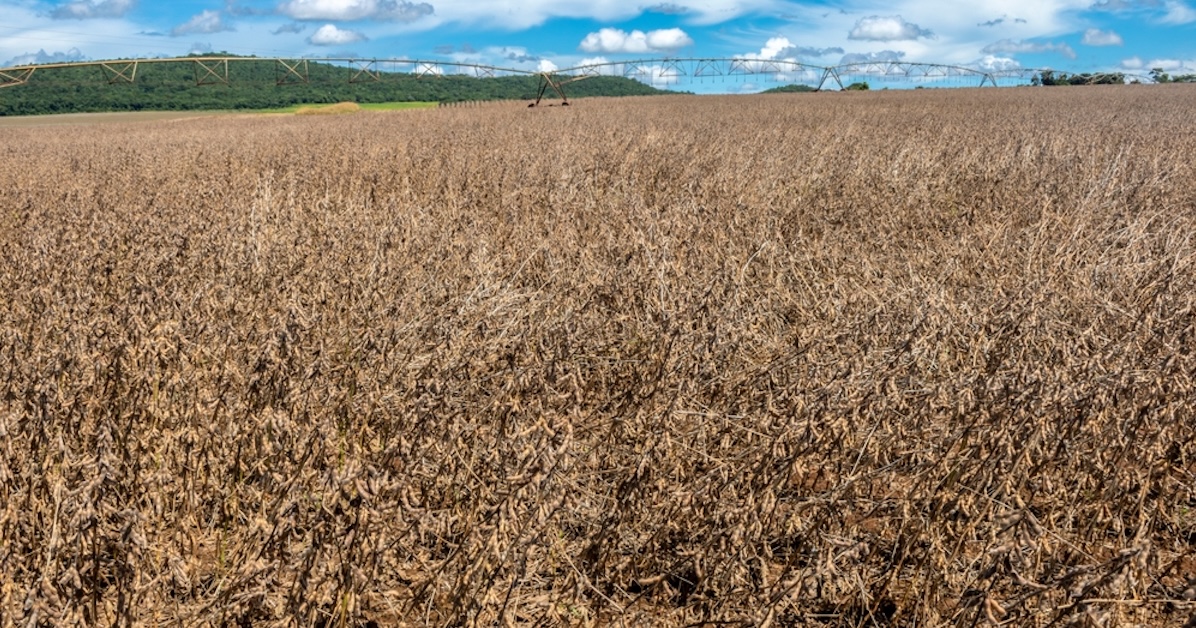
Martin criticised glyphosate’s use as a pre-harvest desiccant to dry down grain crops before harvest, pointing out that some farmers spray in the morning and harvest the same afternoon. He condemned this as “bad practice”, as it results in high residues of glyphosate in the grain that people eat. However, he has tried other methods to kill cover crops and found them unsatisfactory: crimp rolling doesn’t work on all cover crops and ploughing kills ground nesting birds, such as skylarks – a point also emphasised by Georgie Bray. (GMWatch notes, however, that pesticides, including glyphosate, also have devastating effects on birds, including disrupted hormones and growth and poor body condition.)
Martin said that to get rid of glyphosate and other herbicides, integrative weed management was needed, but that presents economic challenges. There is no market recognition for a farmer who tries to do the right thing. Policy and legislative change is necessary so that all farmers are in the same boat and “share the risk” of reducing pesticide use.
Martin added that farmers in Northern Britain, where the weather is wetter, want to continue to use glyphosate as a pre-harvest desiccant – but “they used to farm without it” and presumably could do so again. He was keen to see pre-harvest desiccation with glyphosate herbicide banned in the UK, as has already happened in the EU.
He also blamed the supply chain for presenting farmers with restrictive growing contracts that demand pesticide use: “They want me to apply pesticides on wheat used for baby food, to avoid mycotoxins [toxic substances produced by fungi]!” (We’ve heard the same complaint from apple growers, who are forced under their contracts with supermarkets to apply pesticides “just in case”, for such trivial reasons as to avoid cosmetic blemishes on the fruit that don’t affect yield, taste, safety, or nutritional content.)
Martin said: “We need to redefine conventional farming so that it’s about working with nature. But we also need the government and supply chain to support us on a range of pesticides, to allow farmers to shift away from them.” He added that some supply chain initiatives are financing knowledge systems to help farmers move away from pesticides.
In response to a suggestion from the audience that farming needed to shift from annual crop rotations, which favour weed growth, to perennial crops, Martin agreed that annual crop rotations are not sustainable in the long term and that markets and the whole farming system need to change: “Most of what we currently produce are not food crops for people but energy crops for animal feed and biofuels.”
He also warned that the advent of GM gene-edited seeds in England will create an additional dependency for farmers, as they will have to pay licence fees and royalties to the chemical companies that develop and own these seeds.
Georgie Bray: Farmers must not bear the financial risk
Georgie said that RSPB’s Hope Farm has reduced glyphosate use by 50%, with the result that the soil was healthier, with more organic matter and worms. However, the invasive weed blackgrass was an ongoing problem and they still use glyphosate to kill it. She agreed with Martin that “farmers should not be expected to bear the risk of reducing pesticides” and that any plan to do so must make business sense.
She said that herbal leys, in which plants grow densely and outcompete weeds, help with weed management and improve soil. Another possible system is agroforestry, where trees can suppress weed growth.
Nick Mole: Let’s ban it!
Nick Mole’s message on glyphosate was straight to the point: “Let’s ban it!” However, he cautioned that we don’t know how much is being used in urban settings – in public parks and playgrounds, and on roads, pavements, and railway tracks – as no central register is kept. There are figures on agricultural use and they are staggeringly high: 1.3 million kg on cereals in 2022 alone. Half of non-organic bread products tested were found to contain glyphosate.
Nick said there were some obvious ways we can reduce glyphosate use and exposure in the UK right now:
* Ban sales to the public
* Ban urban use, as France and Denmark already have done
* Ban use for pre-harvest desiccation in agriculture.
He added that glyphosate’s use in so-called regenerative agriculture (to avoid ploughing) is unacceptable: “It undermines the legitimacy of the system.” Martin Lines agreed with this view.
Nick said that having glyphosate available is a blocker to innovation. If it were banned, other solutions would be found. He recalled that the UK National Farmers’ Union had repeatedly “cried wolf” before different pesticides were banned, claiming that farmers couldn’t manage without them, but these claims turned out to be false as farmers found other ways to deal with the relevant pest or weed problem.
Nick said retailers needed to invest to support farmers in moving away from glyphosate and other pesticides and the agronomists who advise farmers must be independent of the pesticide industry. He suggested that a pesticide tax might act as an incentive to move society away from toxic chemicals.
Summing up, Helen Browning said there appeared to be a consensus among the speakers that glyphosate should be banned for pre-harvest desiccation and non-agricultural use, and that farmers should be supported to move away from it.
Image of soybean field desiccated with herbicide: Shutterstock (licensed purchase)